01
Full-car aerodynamic coefficients
ClA · full carCdA · full car
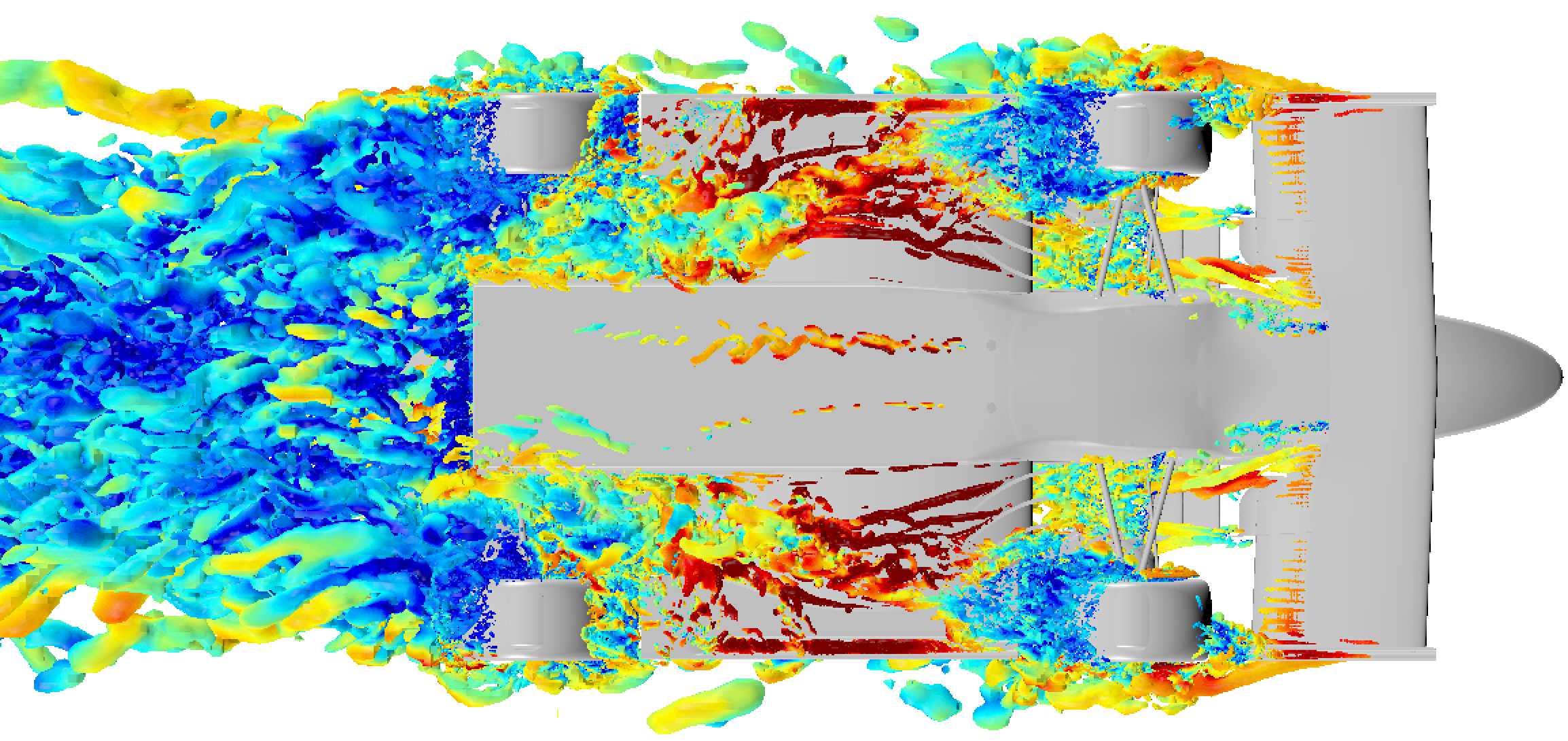
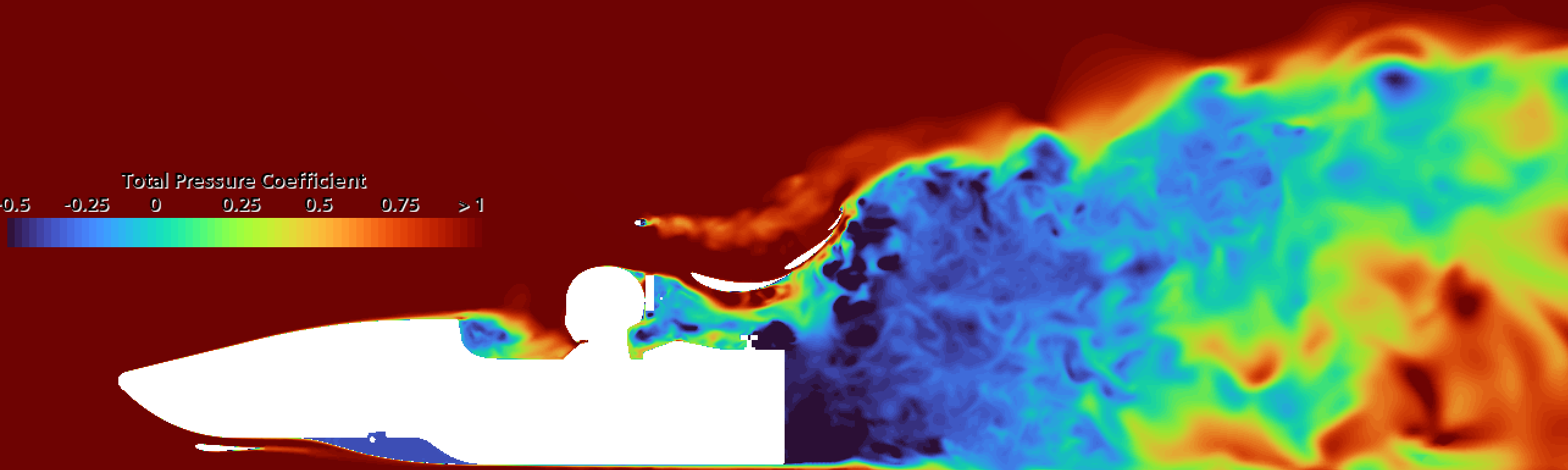
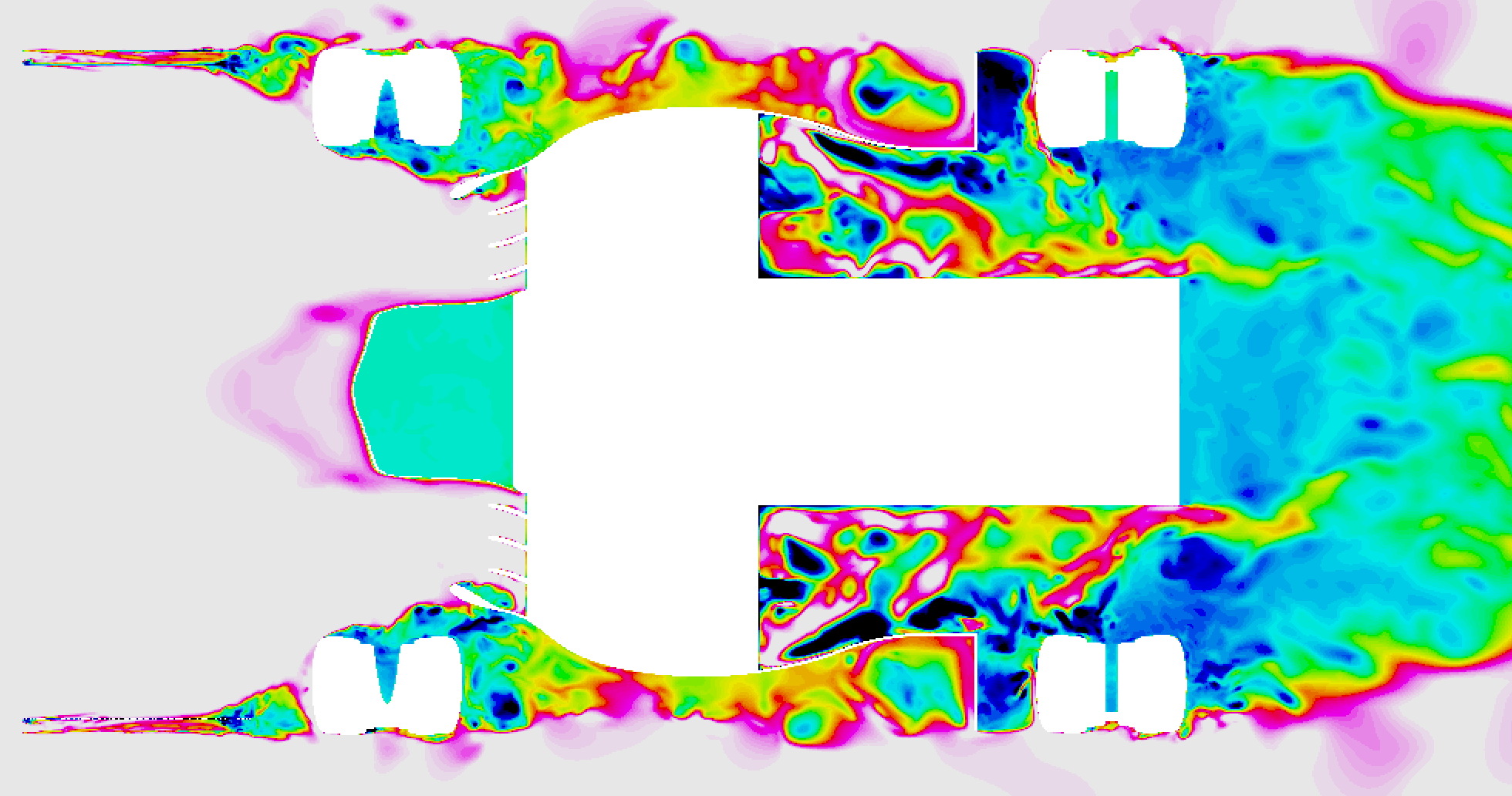
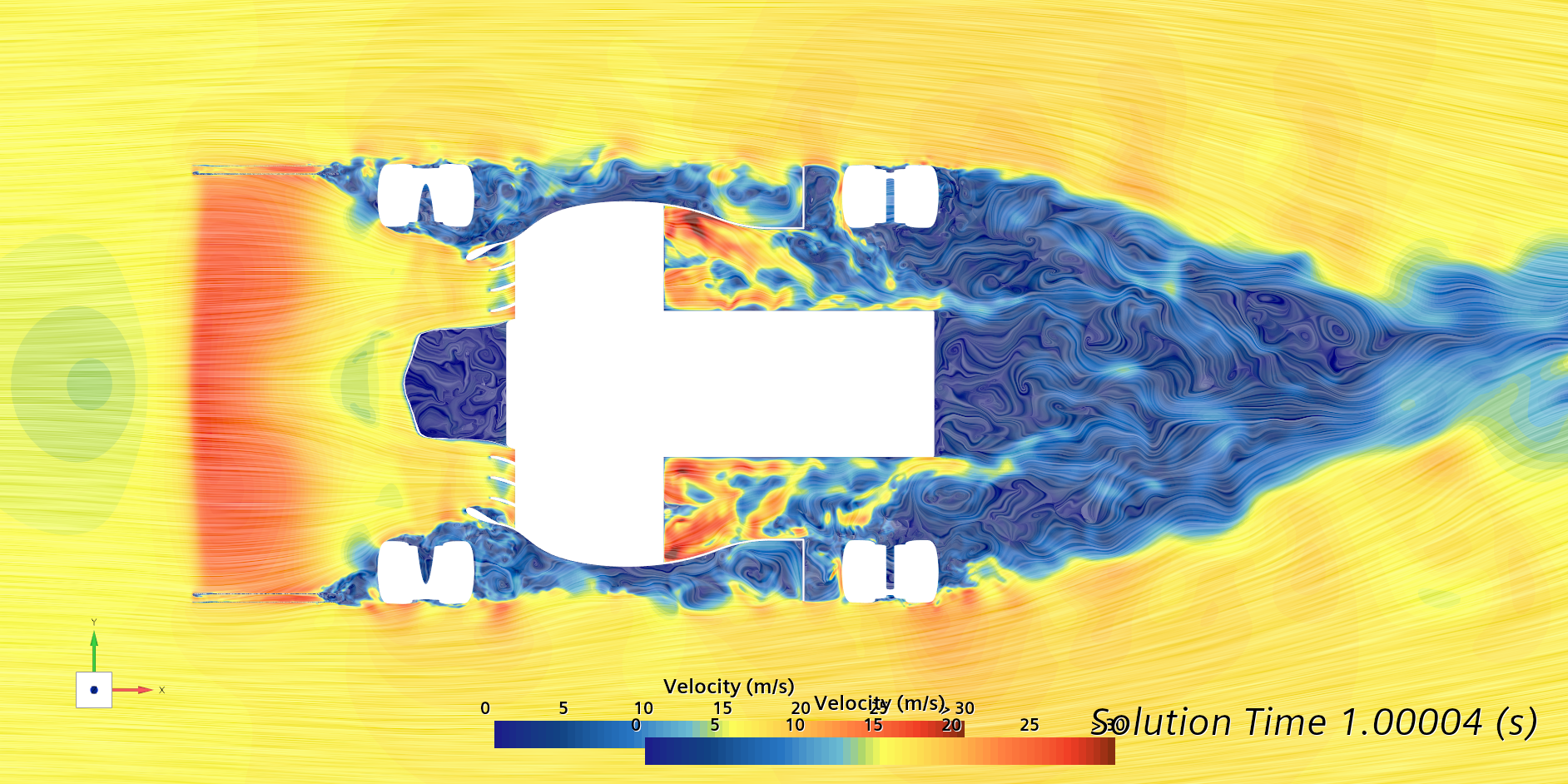
As part of my second year at Oxford Brookes Racing, I worked on setting up a high-fidelity DES simulation of our Formula Student car. The main aim was to better understand the unsteady turbulent structures around the car, including tyre wakes, underbody vortices and their influence on the overall aerodynamic performance.
Project write-up
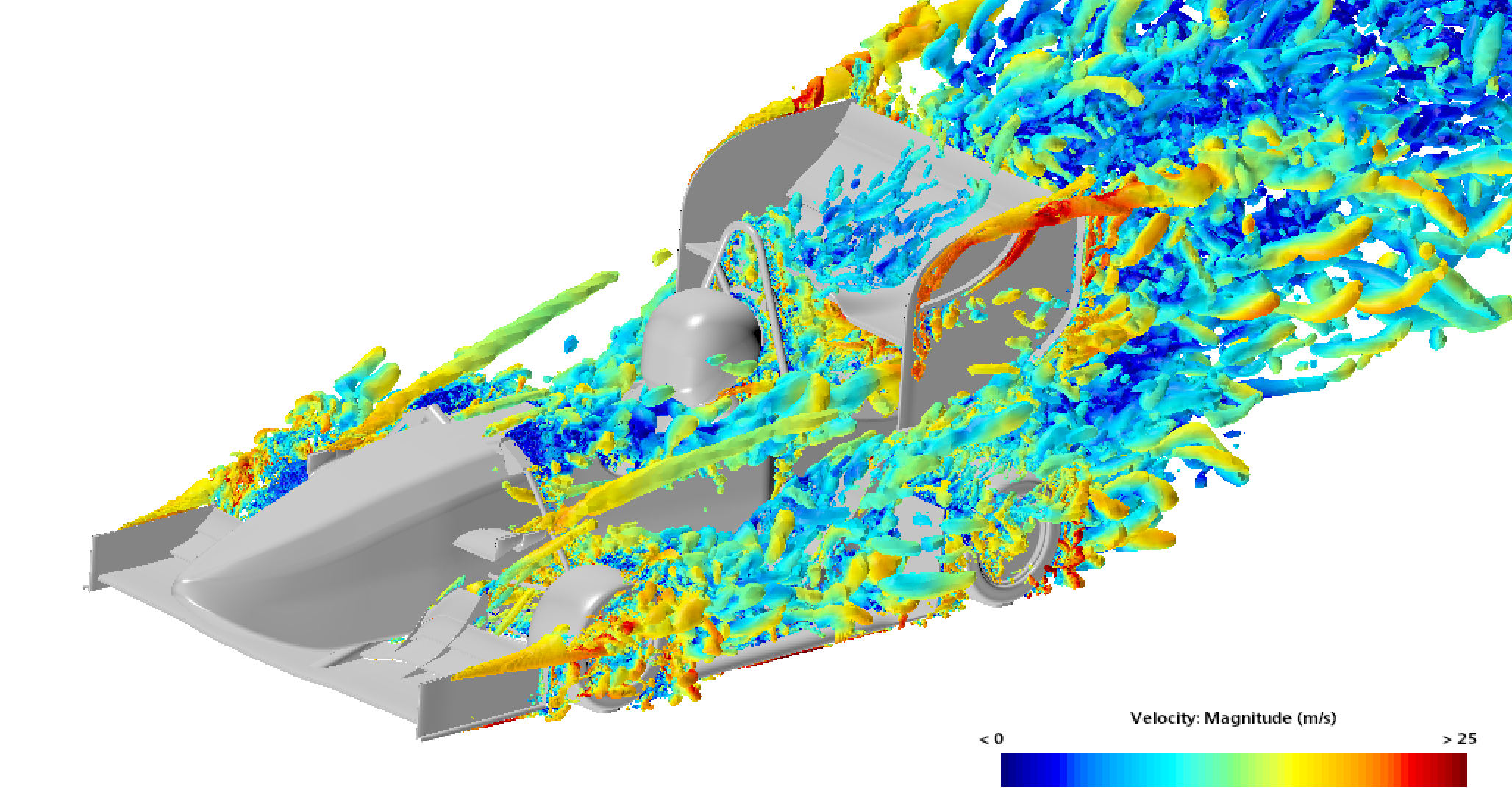
The aim of this DES simulation of the Oxford Brookes Racing Formula Student car was to give the team a better insight into the unsteady turbulent structures forming around the car, such as tyre wakes and underbody vortices spooled off the strakes.
To run simulations of this scale, Oxford Brookes Racing relies on Amazon Web Services (AWS) cloud clusters. AWS allows us to automate, compute and post-process projects which would otherwise be very difficult to run locally.
Key statistics: Cell count: 93 million. Cluster: 4× hpc7a.96xlarge. 768 cores, 3.072 TB RAM. 7529 time steps, 1.0 s physical time. Post-processing GPU: 384 GB VRAM. Total file size: 434 GB.
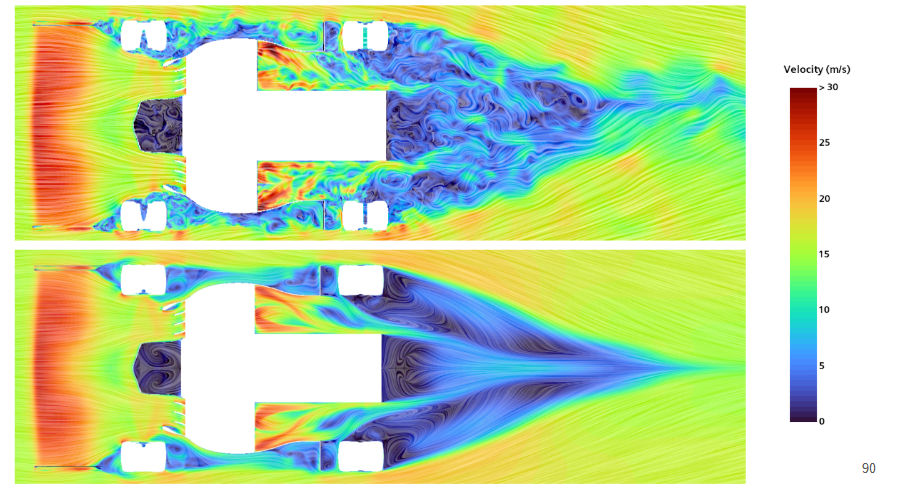
Standard RANS simulations are relatively fast, but because the turbulent flow is time-averaged, a lot of information about transient structures is lost. DES is a hybrid approach between RANS and LES, using RANS inside the boundary layer and LES to resolve the detached turbulent regions and wake. For this simulation, SST-DES was used to take advantage of the SST Menter model and its performance around near-wall pressure gradients.
The amount of turbulence actually resolved depends heavily on the mesh. In the key areas of this simulation, approximately 83% of the turbulent kinetic energy was resolved.
One of the biggest challenges during the setup was creating an AMR field function which could effectively capture the focus, departure and Euler regions of the flow. After testing different approaches, I decided to use a combination of Total Pressure, Pressure Gradient and Helicity, with an appropriate threshold assigned to each one. This allowed the mesh to refine itself around the turbulent structures we were most interested in.
To improve stability and reduce computational cost, the DES was first initialised from a RANS precursor solution. Adaptive Mesh Refinement was also used during this stage to further refine important areas before starting the transient simulation.
The final mean CLA was 4.16% lower than the RANS result, showing how accounting for the unsteady behaviour of the flow can influence the overall aerodynamic prediction.
There are still a few areas where I believe the simulation could be improved. I would like to add probes to measure the fluctuations of the X, Y and Z velocity components at different locations within the wake, create a function which averages the transient displayers, and resolve tyre rotation using Rigid Body Motion (RBM) rather than only applying a tangential velocity component.
Read the DES post on LinkedIn↗The traces are scaled to their corresponding aerodynamic quantities. Axis values are intentionally omitted.