Wool Tuft Testing of OBR26
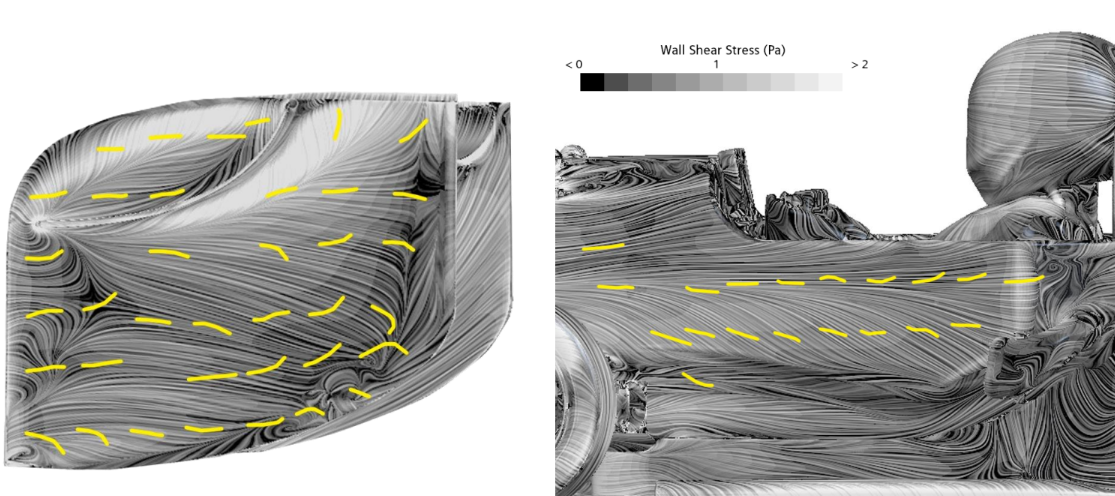
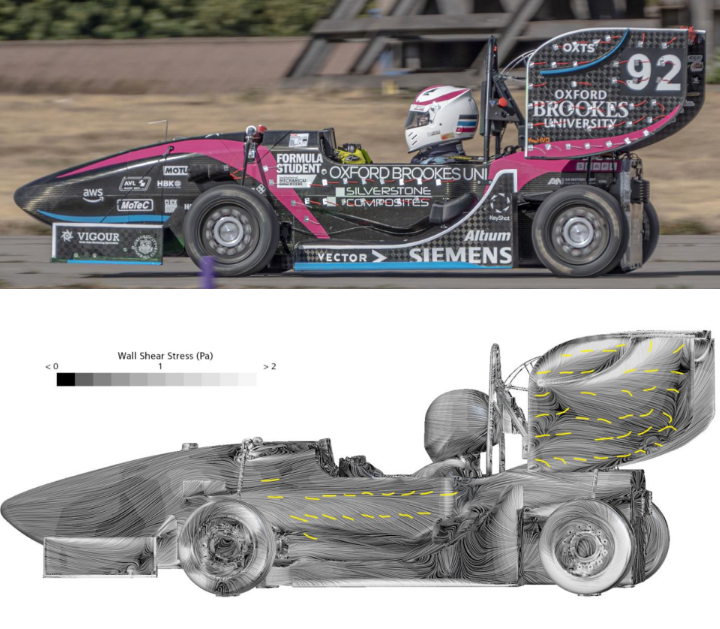
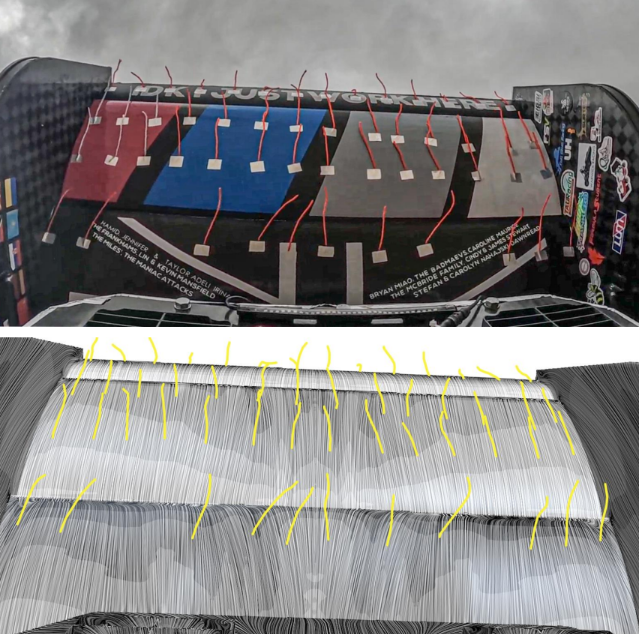
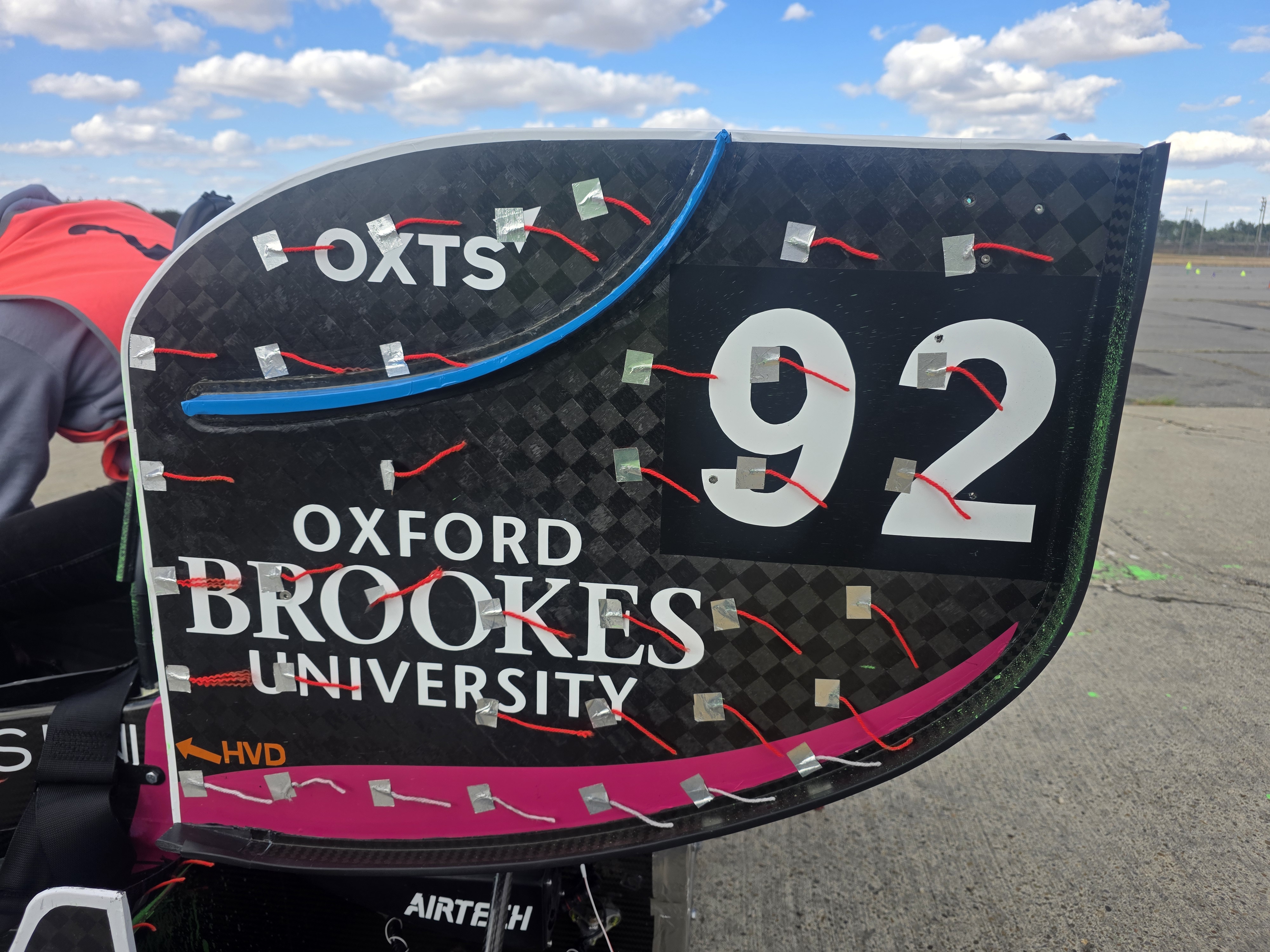
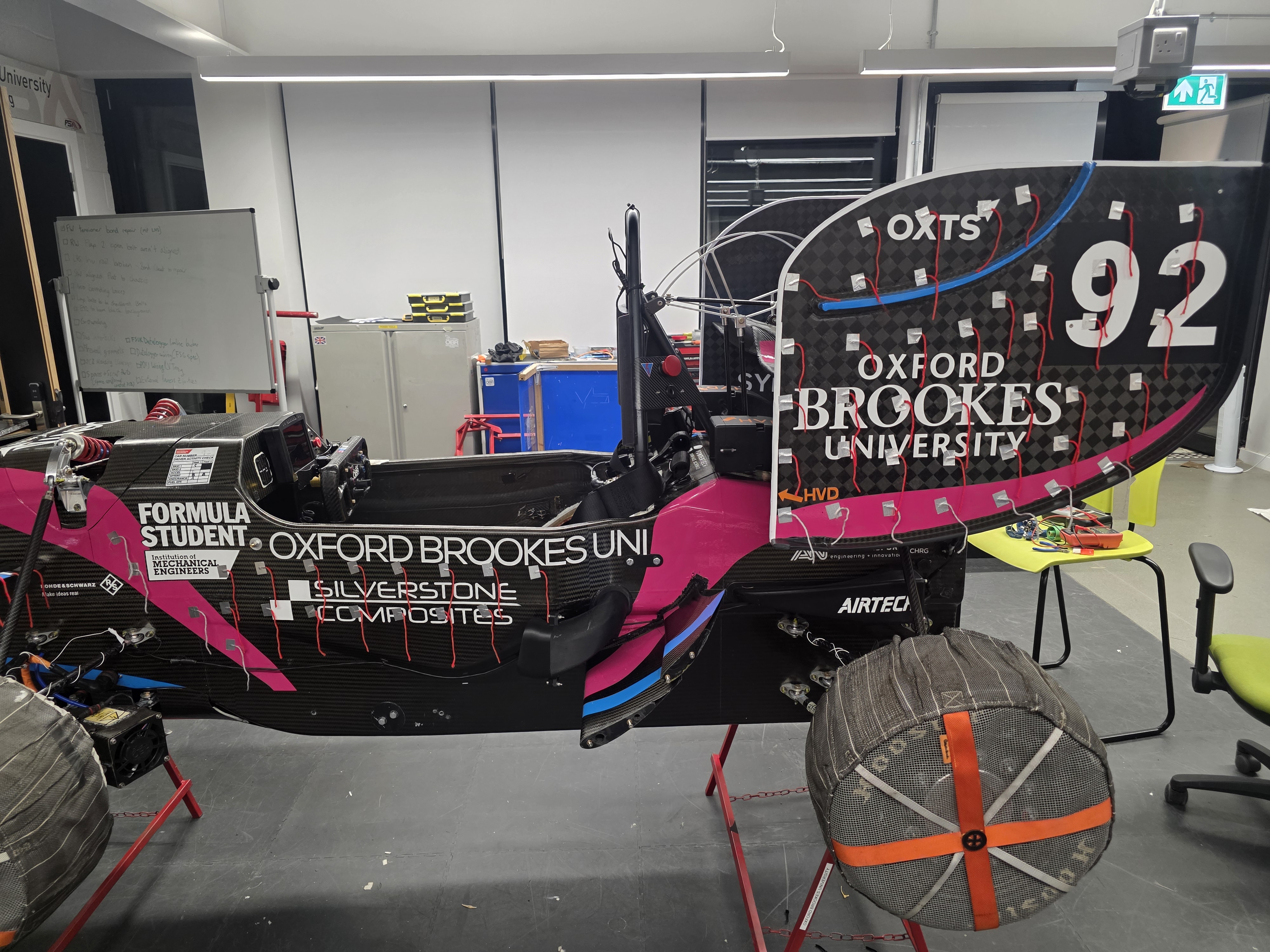
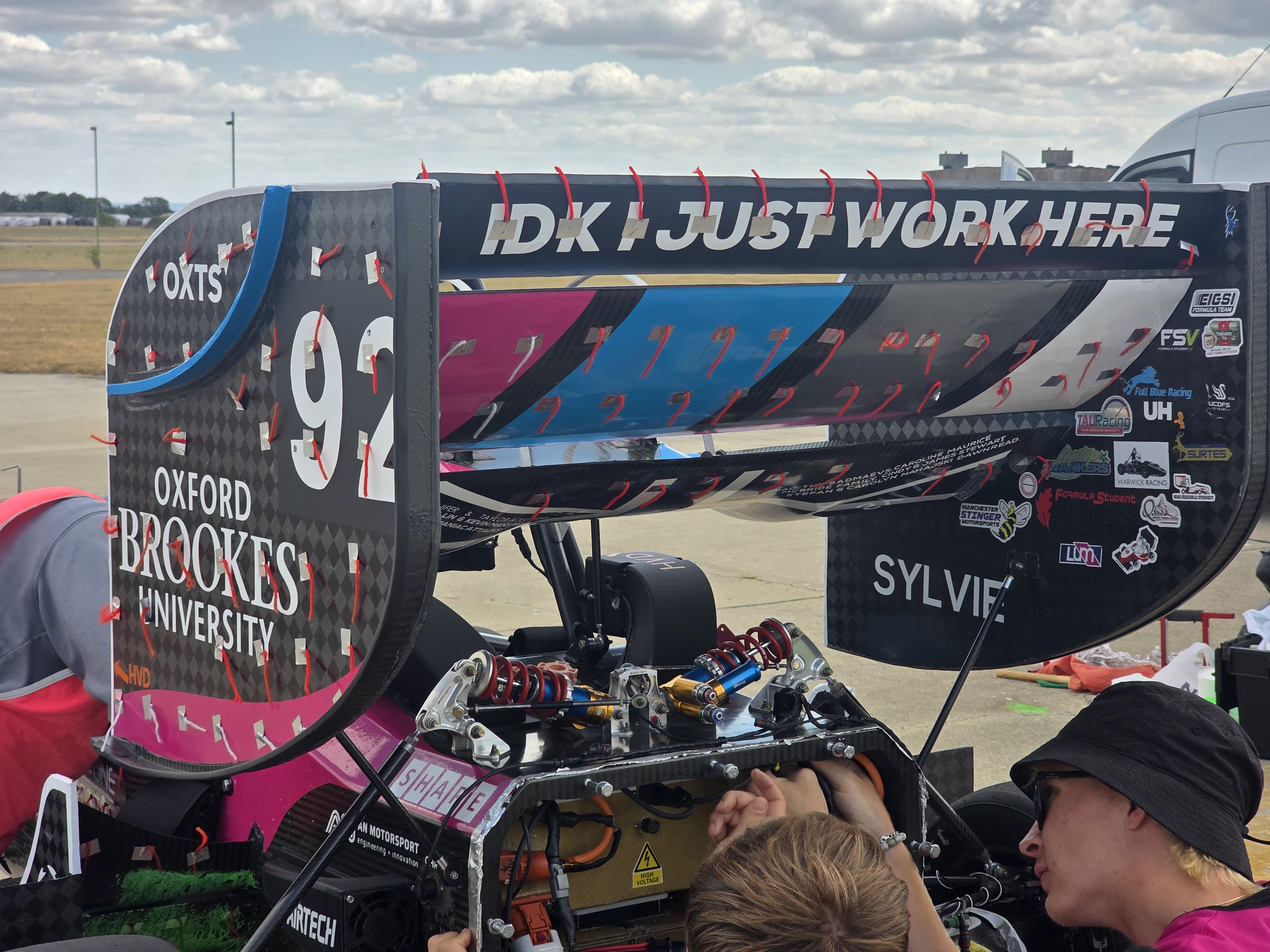
We used 150 wool tufts during OBR26 testing to analyse the local flow direction and potential separation on: rear wing (low pressure side), rear wing endplate, whisker, side wing high pressure side, side wing supporting flaps and chassis
Project write-up
I also helped carry out wool tuft testing on the full car. The aim was to get a simple visual indication of local flow direction, attachment and separation, particularly in areas where CFD showed complex wake behaviour.
For the test, around 150 wool tufts were prepared and attached to different parts of the car. We recorded the tufts during acceleration and autocross runs, including footage from underneath the rear wing and from cameras positioned beside the car.
The main value of the test was being able to see how the flow behaved under real track conditions, including the effect of crosswind, vehicle pitch and changing speed. In some areas the tufts showed clean and consistent flow, while in others they became much more disturbed, giving us a quick way of identifying regions of separation or strong wake interaction.
Overall, the wool tufts showed good corelation with our CFD model, however oftentimes underpredicting the separation, although most velocity vectors were matched with a satisfactory degree of accuracy.
Images